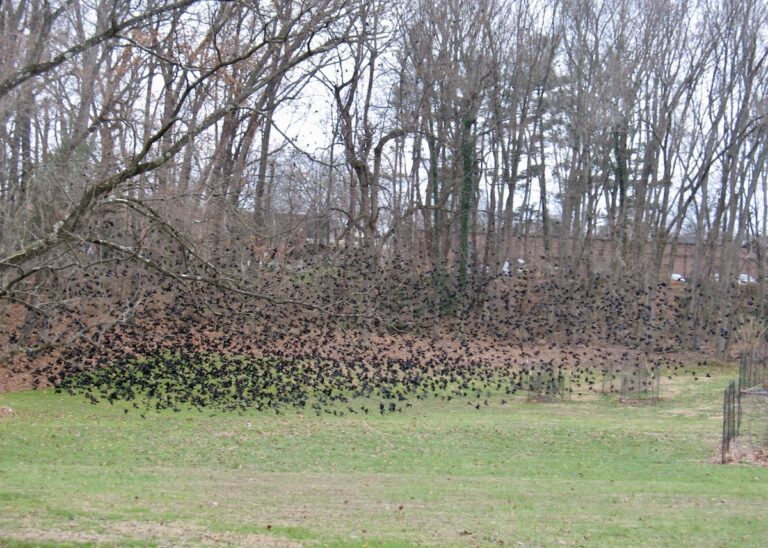
Our ancestors kept an eye on bird behavior to predict the weather.
Before we had Doppler radar and weather satellites, people paid close attention to what was happening in nature to help predict and prepare for changes in weather. Observing birds and what they were up to was especially useful in predicting the types of weather changes that were coming. In particular, our ancestors noticed that an approaching storm makes birds restless.
A drop in air pressure causes air to become “heavier,” making it more difficult for birds to fly at higher altitudes. When birds fly low in the sky, a weather system is usually approaching, since bad weather is associated with low pressure.
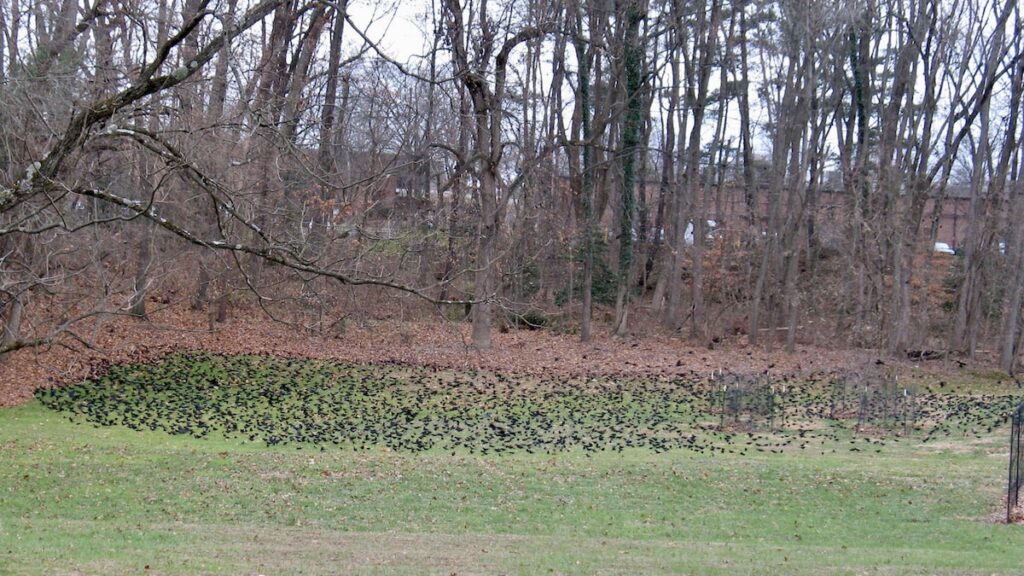
The arrival of low pressure can also cause certain birds to hunt for insects that are flying lower to the ground for the same “heavy air” reason. Blackbirds in particular, being highly social and intelligent creatures, prefer the safety and comfort of moving and gathering in flocks. Flocking helps birds notice and defend against predators, as they can all look in different directions to see threats. In addition, if a predator should come upon a flock, it can be distracted and confused by the swirling bodies and have a more difficult time picking out a single prey bird to target.
Updated at 4:50 p.m. on Dec. 11
For those who would like to learn more about bird and their behaviors, the Environment & Parks Committee of Great Falls Citizens Association will host Mark Ludlow, noted Ornithologist, wildlife expert, Army Airborne Ranger, PhD Archaeologist, and author of dozens of birding articles for a presentation Supporting Wild Birds Over the Winter Season on Monday December 13 at 7:00 pm.
Ludlow is owner of The Bird Store in McLean and has lived in the area for over 25 years. Besides authoring dozens of birding articles and teaching a class at Montgomery College in Rockville, Md., entitled All About Birds, Ludlow’s biography includes an early stint on Wall Street and service in the U.S. Army as an Airborne Ranger. He holds several graduate-level certificates in ornithology and natural history field studies, and has conducted graduate work at American University as well as the University of Wales and Oxford University. Among his academic ornithological achievements was a grant from the National Geographic Society to study taxon cycles and conduct island avian biogeographic studies of Caribbean birds on the islands of St. Kitts and Nevis.
Ludlow is also a Registered Professional Archaeologist and a voted member of the Council of Virginia Archaeologists. He actively supervises archaeological projects where he and his crews watch birds during excavations.
The meeting will be conducted via Zoom. If you would like more information and a Zoom invitation, email EP Committee Co-Chair Suzanne Black at black72@msn.com