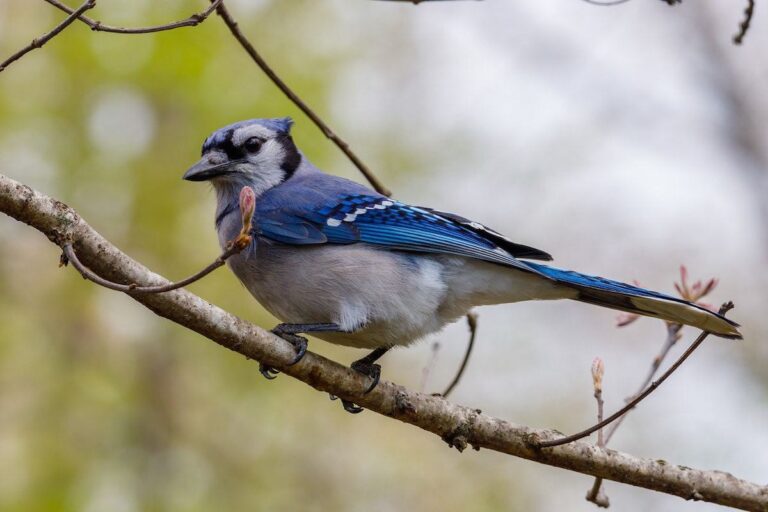
In late May, wildlife managers in Washington D.C., Virginia, Maryland, and West Virginia began receiving reports of sick and dying birds with eye swelling and crusty discharge, as well as neurological signs. These birds, most commonly grackles and blue jays, have reported to have a range of symptoms including eye infections, injuries, and general weakness. No definitive cause is identified at this time.
The District of Columbia Department of Energy and Environment, Maryland Department of Natural Resources, West Virginia Division of Natural Resources, Virginia Department of Wildlife Resources, and National Park Service are continuing to work with diagnostic laboratories to investigate the cause of mortality. Those laboratories include the USGS National Wildlife Health Center, the University of Georgia Southeastern Cooperative Wildlife Disease Study, and the University of Pennsylvania Wildlife Futures Program.
Birds congregating at feeders and baths can transmit disease to one another. Therefore, the state and District agencies recommend that the public in the outbreak area:
• Cease feeding birds until this wildlife mortality event has concluded;
• Clean feeders and bird baths with a 10% bleach solution;
• Avoid handling birds, but wear disposable gloves if handling is necessary; and
• Keep pets away from sick or dead birds as a standard precaution.
The Animal Welfare League of Arlington is asking members of the public to dispose of these birds promptly when found on their property, and has suggested these additional guidelines:
- Consider picking up the birds using the same method you would for pet waste.
- Invert a bag over your hand, pick up the bird, and then pull the bag over the bird, tying with a knot at the top before disposal.
- Dispose of in waste receptacle outside of the home.
- Ensure diligent hand washing after disposal.
The public has been asked to submit a Bird Mortality Reporting Form at the Virginia DWR webpage if they encounter sick or dead birds in Virginia.
Additional information will be shared as diagnostic results are received.
Source: Virginia Department of Wildlife Resources and Animal Welfare League of Arlington