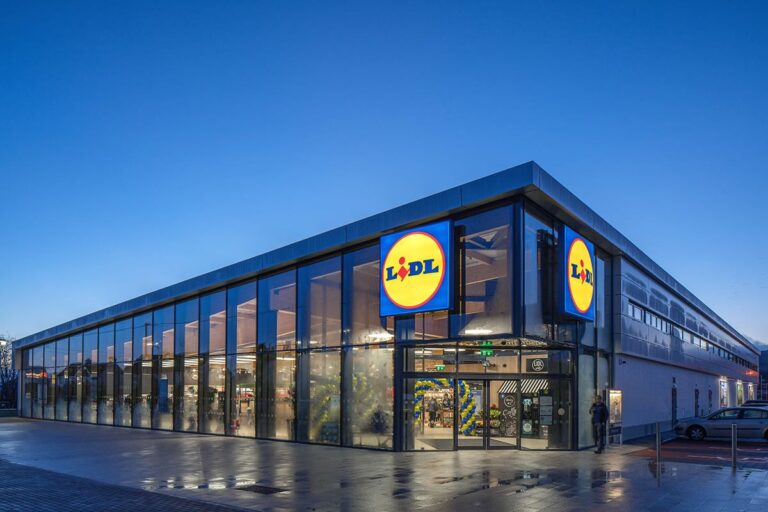
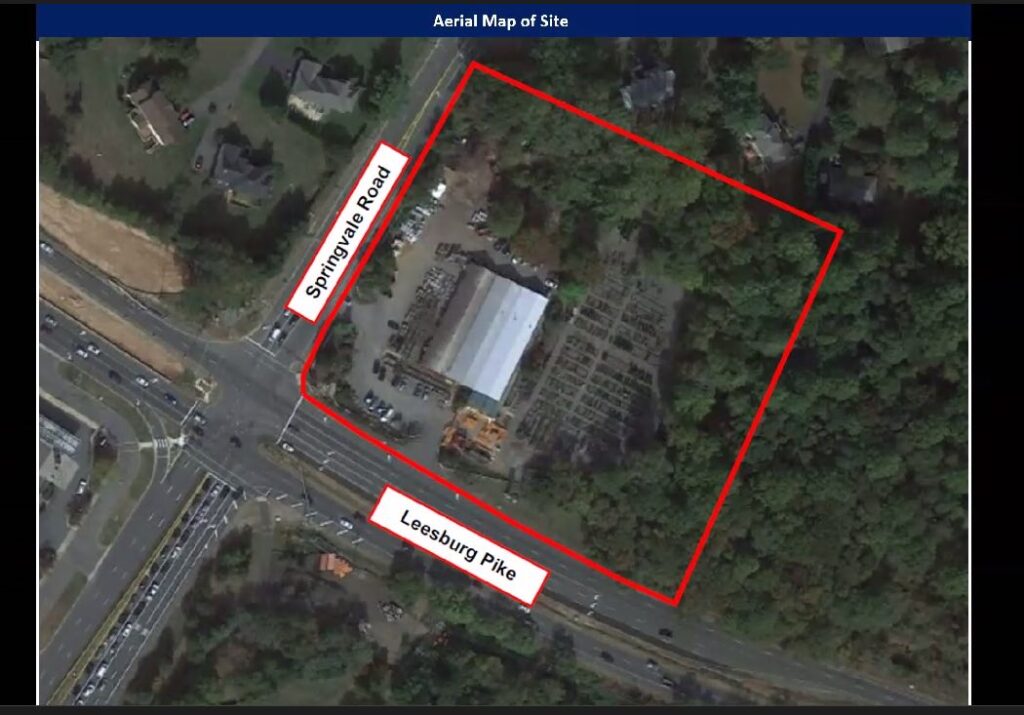
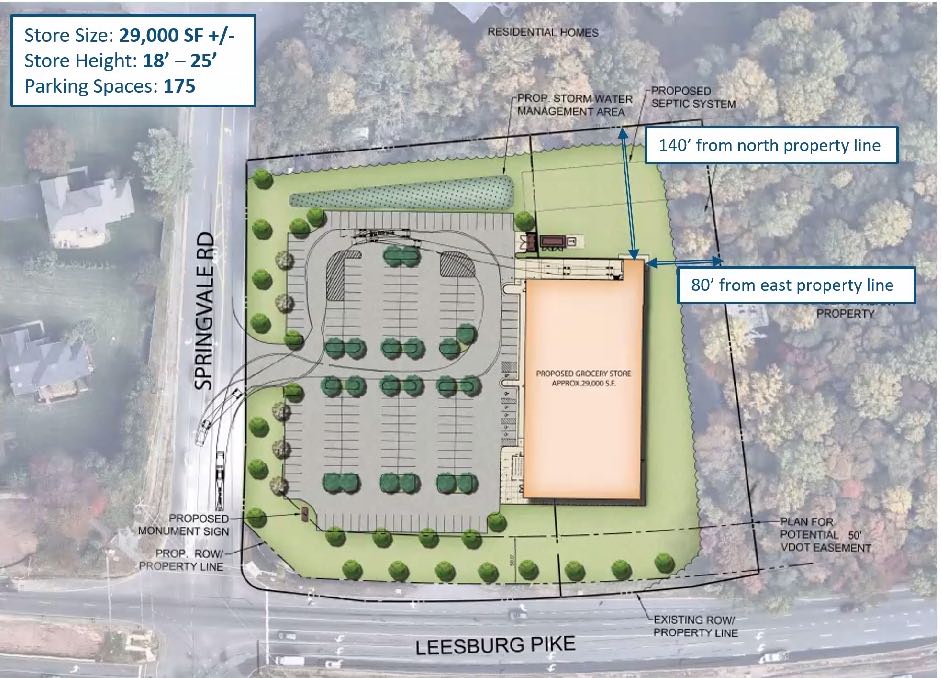
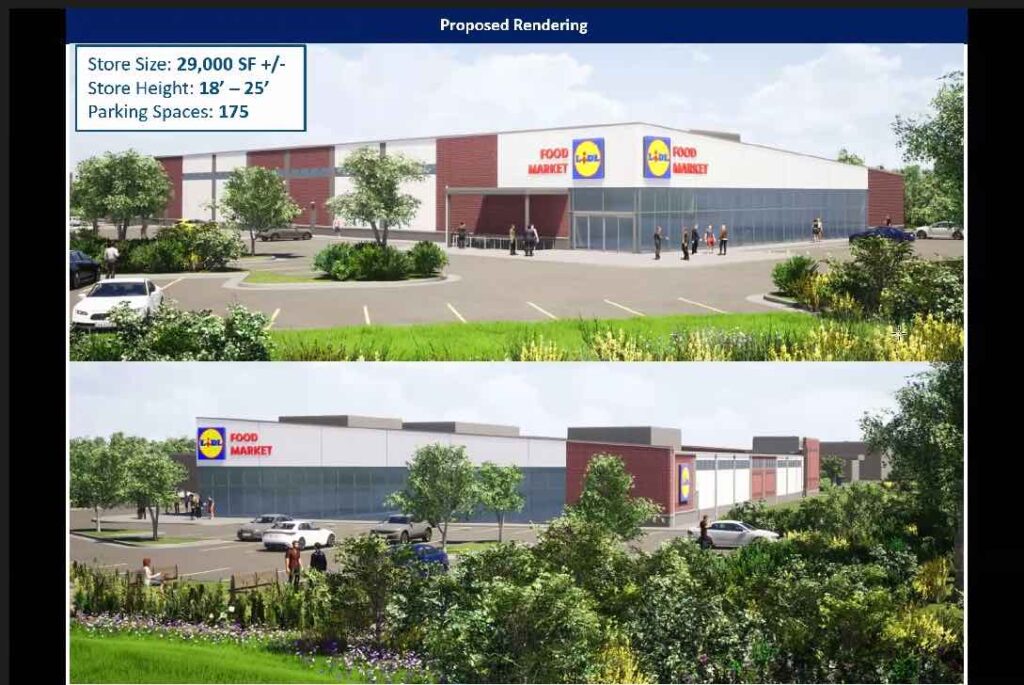
The virtual town hall meeting hosted by Great Falls Citizens Association on June 3 attracted more than 50 participants eager to hear more about Lidl USA’s plan to construct a 29,000 sq. ft. grocery store on the northeast corner of Route 7 and Springvale Road. The 5.6 acre site, currently zoned R-1 (residential) is owned by Meadows Farms Virginia, LLC. That company has been operating a nursery at this location since the 1980s under a special exception to the zoning designation. The proposed project would require that Lidl seek and acquire a change in both the Fairfax County Comprehensive Plan and a rezoning of the property to commercial use.
During their presentation, Lidl’s attorney, Lynne Strobel, and company representatives Nicholas Cacaci (Virginia Real Estate Director) and Andrew Bolton, stated that their market research, including a survey of nearby residents, showed the need for a second grocery store in the community, since other areas in Fairfax County have five times as many options than Great Falls, and because Great Falls residents have been getting their groceries from other stores besides the local Safeway. The presenters characterized that condition as a hardship for Great Falls residents, since shoppers have to travel to neighboring towns. They believe that their proposed Lidl would provide another, more convenient shopping alternative.
According to Lidl, 14,000 residences within of a 2.5-mile radius of the intersection of Springvale Road and Georgetown Pike, including homes in Great Falls, Vienna, Sterling and Reston, were surveyed. Of the 900 responses received (a 6 percent response rate) 46% favored a new store. However, information on what portion of the 46% represented Great Falls residents was not available.
The Lidl reps presented the findings of their studies – that there is a need for an additional grocery store in the neighborhood and that Lidl is the best store to meet that need. However, while Lidl’s survey focused on consumer preferences for a particular grocery chain, a different survey of GFCA members was conducted by the Land Use and Zoning committee. That survey focused on the advisability of changing a residentially-zoned property to commercial, and the long-term implications to the neighborhood with more commercial development of the Route 7 corridor between Tysons Corner and Loudoun County. GFCA feels that the central issue when considering the Lidl proposal is not which grocery store should occupy the site, but rather whether the County’s master guide to decision-making about the natural and built environment should be amended and the property rezoned. Ninety-one percent (91%) who responded to the GFCA survey opposed the zoning change. The response rate was 22%.
Response to Lidl’s proposal during the meeting was mixed. While some residents favored another option for their shopping, and many viewed the Lidl brand favorably, most meeting participants voiced concerns with the project’s impact on traffic and safety, noise, pollution and storm water runoff, along with questioning the wisdom of seeking a change in the County’s master plan to obtain the necessary zoning. There is an apprehension in the community, voiced by one attendee after the meeting, that approving an exception for this project would open the door to similar zoning changes at other businesses in the area, including several other existing nurseries.
GFCA has expressed its opposition to the project in a communication to Dranesville Supervisor John Foust and Fairfax County Planning Commissioner John Ulfelder. GFCA’s position is that redevelopment along the Route 7 corridor would create a substantial adverse impact on the adjacent residential communities and would change the character of the road, leading to an erosion of its natural appearances.