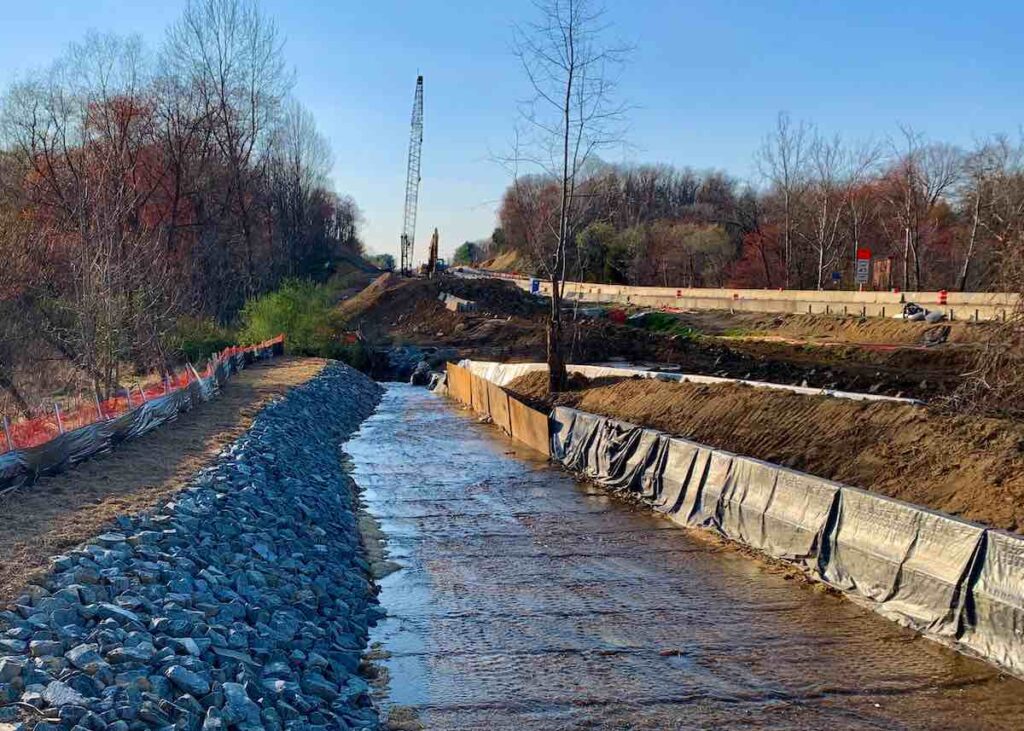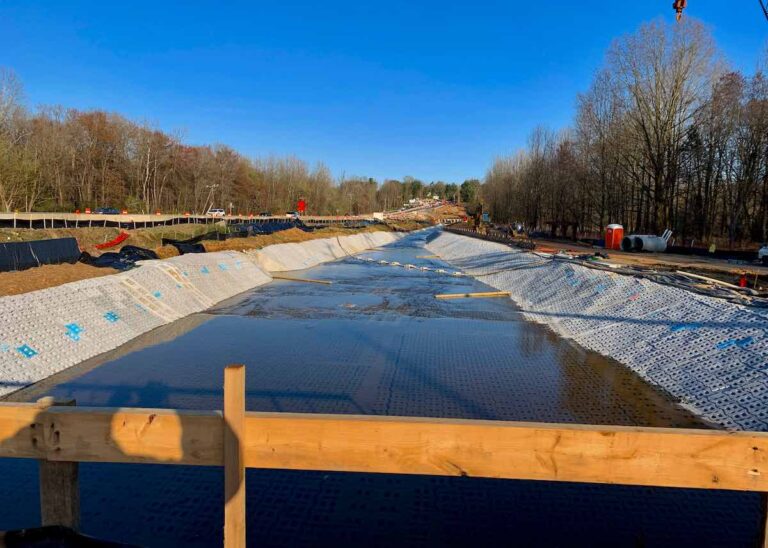
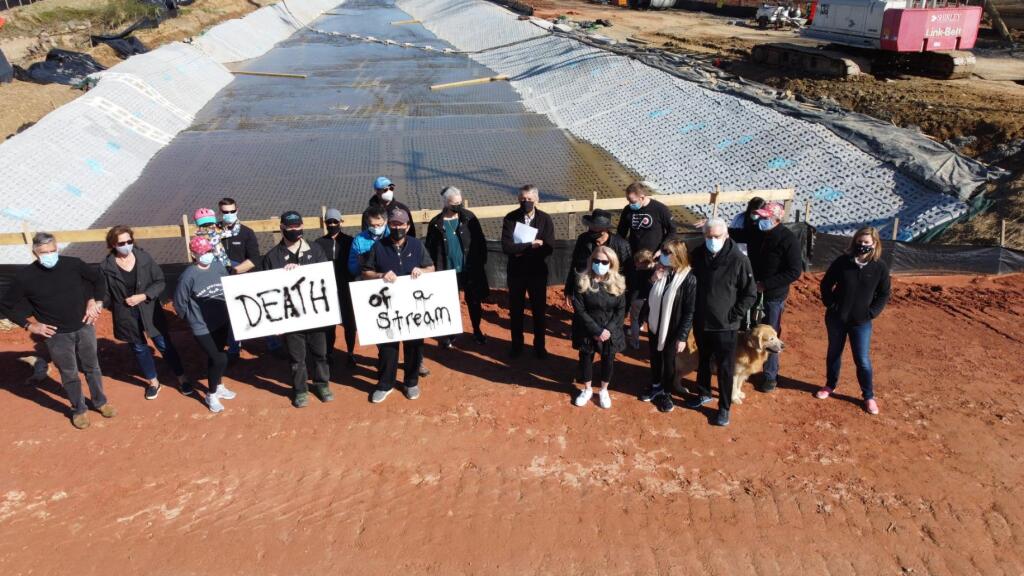
Members of Great Falls Citizens Association (GFCA) and residents of the Carpers Farm HOA gathered on April 3 to commemorate the loss of the serpentine Colvin Run stream bed through the wetlands adjacent Route 7.
The new straight concrete lined waterway shown in the photo above was favored by the Army Corps of Engineers and regulatory agencies despite objections raised by GFCA and others about the relocation and channelization of the stream because of the adverse impact that it would have in managing storm water that feeds into Difficult Run. The community’s preference was for a meandering design with shallow pools that would reduce the flow during heavy rainstorms and avoid a right-angle convergence at Difficult Run which could result in downstream degradation and erosion. Further, there is concern that silt, vegetation, and other storm debris will increase, flowing directly into the Potomac River and, subsequently, into the Chesapeake Bay.
According to a spokesperson from Shirley Contracting, VDOT’s contractor for the Route 7 Corridor Improvements Project:
“Prior to award of the Design-Build Contract, VDOT presented to the regulatory agencies, including the Army Corps of Engineers (USCE), Virginia Department of Environmental Quality (VADEQ) and U.S. Environmental Protection Agency (USEPA), ten conceptual options (with an additional five variations of three of those options) for the Colvin Run relocation, with many factors weighed including impacts to wetlands. … Of the ten alternatives (15 variations overall) developed, the Least Environmentally Damaging Practicable Alternative (LEDPA, which is required by the Clean Water Act Section 404(b)(1) Guidelines (40CFR230)), was determined to be the straight-line channel, as it creates for the smallest impact to the forested wetlands, a highly valued environmental resource. VDOT proposed the use of articulated concrete blocks in lieu of rip rap to line the channel, such that grass can grow up through them, which will help it to appear more natural.”
Regardless of whether grass or weeds grow up between the concrete blocks that line the new channel, the appearance will be anything but natural.