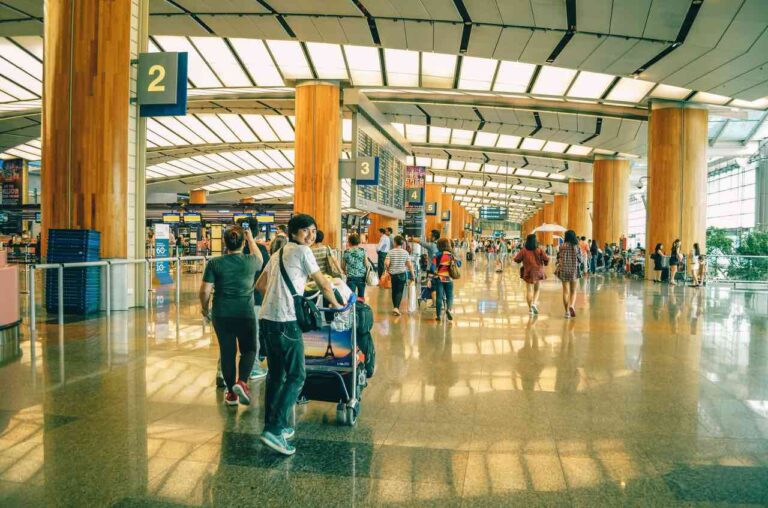
The Transportation Security Administration (TSA) continues to ramp up and refine operations for expected increased passenger travel volumes commencing with the Memorial Day holiday weekend and throughout the summer months.
The summer travel season, which begins in late May and extends through and beyond Labor Day weekend, covers three full months and three major holidays.
Changes to airport screening checkpoints include the deployment of two new technologies, Credential Authentication Technology (CAT) and Computed Tomography (CT). Since the pandemic, TSA deployed these systems to checkpoints and modified screening procedures in an effort to reduce physical contact. TSA deployed 501 CAT units to 88 airports and 323 CT units to 141 airports nationwide. The modified CAT unit allows passengers to scan their own ID to complete the identity verification process and eliminate the need to hand the credential to a TSA officer. The CT units provide TSA officers the ability to review a 3D image of passengers’ bags and reduce the need to search the bag’s contents. Passengers screened in security lanes with CT units do not need to remove their 3-1-1 bag or electronics. In addition, TSA installed acrylic barriers throughout its checkpoints nationwide.
For those who choose to travel this summer, follow these five simple tips to get through the TSA checkpoint quickly and efficiently.
Tip 1: Wear a face mask. Face masks remain mandatory for employees and passengers, regardless of vaccination status, throughout all domestic transportation modes, including airport security screening checkpoints. Since the implementation of the face mask mandate for travelers on Feb 2, there has been near-total voluntary compliance throughout the entire transportation system.
Tip 2: Pack smart; start with empty bags. Those airline passengers who begin packing for travel with empty bags are less likely to bring prohibited items through a TSA checkpoint. Technology and modifications help reduce the need for physical contact with TSA officers, but those who take time to come prepared for the TSA checkpoint are far more likely to avoid physical contact. Check for prohibited items by using the “What Can I Bring?” page on TSA.gov.
Tip 3: Consider other ways that might help avoid physical contact at the checkpoint. Prior to entering the line for the TSA checkpoint, take a few minutes to prepare. Place jewelry, keys and other pocketed items into your carry-on bag so they might be scanned with need for fewer bins at the conveyor belt. Have a valid ID card readily available and follow the liquids rule of 3.4 ounces or less, with the exception of hand sanitizer, which has a temporary 12-ounce limit in carry-on baggage.
Tip 4: Contact TSA for help if there are questions or concerns. Those who are preparing to travel and may have special circumstances, considerations or general questions about airport screening can get live assistance by tweeting questions and comments to @AskTSA or via Facebook Messenger, weekdays from 8 a.m. to 10 p.m. EST and weekends/holidays from 9 a.m. to 7 p.m. EST. You can also call the TSA Contact Center at 866-289-9673.
Tip 5: Enroll now in TSA PreCheck® to “Travel with Ease.” By enrolling in TSA PreCheck, airline passengers can avoid removing shoes, belts, liquids, food, laptops and light jackets at the TSA checkpoint. Most new enrollees receive their known traveler number within five days, and membership lasts for five years.
Source: TSA Press Release